Scalp Psoriasis Treatment in Bangalore: Safe, Evidence-Informed, Long-Term Care
Scalp psoriasis is a chronic, immune-mediated inflammatory condition affecting the scalp and surrounding areas, including the hairline, forehead, behind the ears, and sometimes the neck. Unlike common dandruff, it is not caused by poor hygiene and is not contagious; it’s a long-term medical condition that requires accurate diagnosis and consistent, well-monitored management.
If you’re searching for scalp psoriasis treatment in Bangalore, especially for a child or a long-standing case, this guide explains what the research actually shows, how Ayurveda approaches the condition, and what realistic treatment looks like.
What Is Scalp Psoriasis?
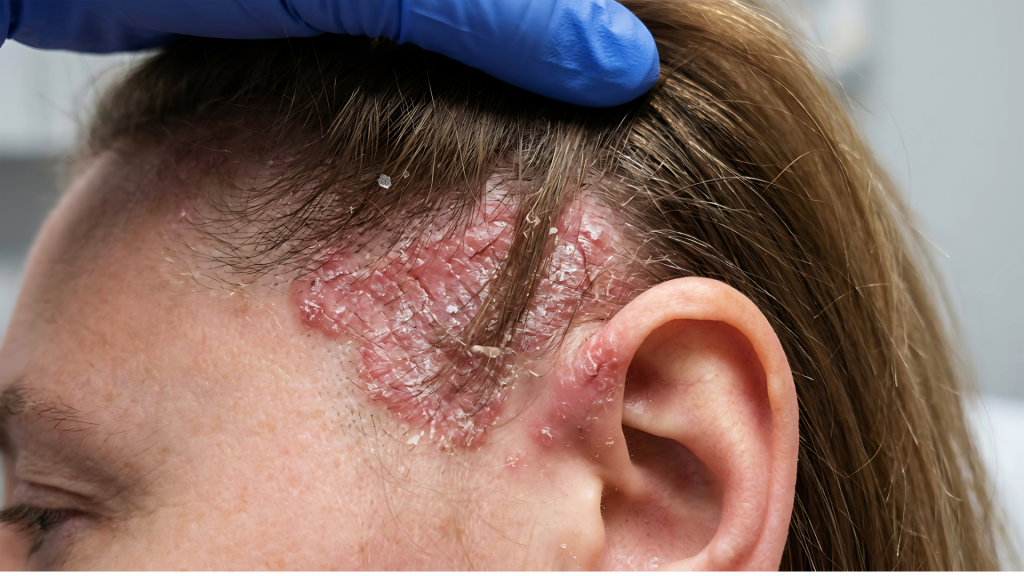
Scalp psoriasis develops from the same overactive immune process described throughout our “What Causes Psoriasis?” guide, applied specifically to the scalp. Instead of shedding normally, skin cells accumulate rapidly, forming thick plaques covered in white or silvery scale.
Key Medical Characteristics
Scalp psoriasis is characterized by well-demarcated erythematous plaques with overlying white scale of variable thickness, more commonly affecting the occipital scalp than the rest of the scalp, according to a clinical dermatology reference. It is chronic and relapsing, non-infectious, and can occur in isolation or alongside psoriasis elsewhere on the body.
The scalp may be the only area of the body affected by plaque psoriasis, though more commonly, scalp psoriasis occurs concomitantly with psoriasis elsewhere. Interestingly, patients frequently do not realize that their scalp rash is related to a rash elsewhere on their body, which is one reason a full-body skin examination is a standard part of proper diagnosis.
How Common Is It?
Scalp involvement is one of the more frequent presentations across the psoriasis population generally. As covered in our pillar guide’s epidemiology section, the reported prevalence of psoriasis in India is between 0.44% and 2.8%, and the scalp is among the most commonly affected sites within that population.
Scalp Psoriasis vs. Dandruff and Seborrheic Dermatitis: Why Correct Diagnosis Matters
One of the most common reasons scalp psoriasis worsens over time is simple misdiagnosis. Treating psoriasis as ordinary dandruff can delay proper care, allow inflammation to build, and increase dependence on harsh shampoos or steroid lotions that don’t address the underlying condition.
Distinguishing Features
Psoriasis is characterized by indurated red papules and plaques with a sharply defined margin and a loose, silvery lamella scale, and nails may show psoriatic changes with a positive Auspitz sign, distinguishing it from seborrheic dermatitis on clinical examination. Seborrheic dermatitis, by contrast, tends to produce thinner, greasier scale with less clearly defined borders.
Modern diagnostic tools can help clarify genuinely ambiguous cases. Dermoscopy is a valuable tool for the differential diagnosis of seborrheic dermatitis, particularly in scalp involvement, and in scalp psoriasis specifically, scales tend to be thicker, with glomerular vessels and red dots more commonly observed under magnification, compared to the arborizing vessels and featureless areas typical of seborrheic dermatitis.
A Related but Distinct Presentation Worth Knowing
A specific scalp pattern sometimes causes additional diagnostic confusion, particularly in children. Pityriasis amiantacea presents as thick, silvery, or yellow scales enveloping scalp hairs and binding them in tufts, and can occur in scalp psoriasis, atopic dermatitis, and tinea capitis alike, meaning this specific appearance alone doesn’t confirm psoriasis without broader clinical context.
Why This Distinction Matters Practically
Choosing the wrong treatment path based on a mistaken diagnosis wastes time and can genuinely worsen outcomes. This is precisely why our clinic performs careful differential diagnosis, including a full clinical history and examination, before recommending any treatment plan, rather than assuming scalp scaling is automatically one condition or the other.
Symptoms of Scalp Psoriasis
Symptoms vary in severity from patient to patient, and can include thick white or silvery flakes, red or inflamed patches, and itching that ranges from mild to genuinely intense. Dryness, cracking, scaling that extends visibly beyond the hairline, and temporary hair shedding from inflammation or scratching are also common.
In more severe cases, patients report real pain or tenderness across affected areas of the scalp. In children specifically, symptoms can be considerably subtler than in adults, which is one reason early, accurate diagnosis matters even more in pediatric cases.
Scalp Psoriasis in Children
Scalp involvement is one of the most common initial presentations of psoriasis in children, echoing the pediatric psoriasis patterns discussed in our pillar guide. Pediatric scalp psoriasis often looks and behaves somewhat differently than the adult presentation.
How Pediatric Presentation Differs
Children often show thinner plaques with comparatively less scaling but more visible redness than adults. Children’s skin also tends to be more sensitive to topical treatment generally, and carries a genuinely higher risk of steroid-related side effects, which is why child-safe, carefully calibrated treatment protocols matter considerably more here than in adult care.
Treatment Caution Specific to Children
Certain ingredients used safely in adults require real caution in younger patients. Salicylic acid is a useful keratolytic agent for small, thick, focal plaques such as those arising on the scalp in children older than six years, but it should be avoided in infants and toddlers because of the risk of percutaneous salicylate intoxication, according to a clinical review published in the Indian Journal of Dermatology, Venereology and Leprology.
This kind of age-specific caution applies across several standard psoriasis treatments, not just salicylic acid. It’s exactly why pediatric scalp psoriasis deserves a deliberately gentler, closely monitored protocol rather than simply using a smaller dose of adult-strength treatment.
Why Conventional Treatment Has Real Limitations
Conventional management of scalp psoriasis typically includes steroid lotions or foams, medicated shampoos, coal tar preparations, and vitamin D analogues. These treatments are genuinely effective for many patients, but they come with documented trade-offs worth understanding honestly.
What the Evidence Shows About Effectiveness and Limits
Standard medical management includes topical corticosteroids such as clobetasol propionate or betamethasone valerate, often applied daily for a limited period before switching to less potent or intermittent use, alongside coal tar shampoos, salicylic acid preparations, anthralin for resistant cases, and calcipotriol-based combination products for longer-term management.
Even well-established treatments show real variability in supporting evidence quality. A review of scalp inflammation treatments found significant variability in evidence quality: while some options like ketoconazole shampoo showed moderate-quality evidence for symptom reduction, many commonly used treatments, including clobetasol propionate shampoo and hydrocortisone, were supported by low or very low quality evidence according to formal grading standards. This doesn’t mean these treatments don’t work; it means the certainty behind how well they work varies more than patients often assume.
The Steroid Trade-Off
Topical steroids remain a mainstay of conventional scalp psoriasis treatment specifically because they work quickly, but this effectiveness comes with real, well-documented limitations. Rebound flare-ups after stopping steroid treatment, gradual thinning of scalp skin with prolonged use, and reduced effectiveness over time with continued use are all genuine, well-recognized concerns, discussed in more general terms throughout our pillar guide’s treatment section.
For pediatric patients specifically, these risks are magnified given children’s greater skin sensitivity, making prolonged steroid use on a child’s scalp a decision that calls for real caution and close medical supervision.
The Ayurvedic Understanding of Scalp Psoriasis
Ayurveda approaches scalp psoriasis as a manifestation of systemic imbalance rather than treating it as an isolated local scalp condition. This traditional framework offers a genuinely different, complementary lens for understanding a chronic, relapsing inflammatory condition.
The Classical Correlation
Ayurvedic literature correlates psoriasis, including its scalp presentation, with classical conditions described in traditional texts. Kitibha Kushta is one among the varieties of Kshudra Kushta that clinically resembles psoriasis, according to case reports published in Ayurvedic medical journals, while other literature correlates the condition more broadly with Ekakushtha, and separately with Kitibha Kushta specifically for scalp involvement.
The Dosha Framework Applied to the Scalp
According to Ayurvedic principles, scalp psoriasis specifically reflects a combination of Vata imbalance, associated with dryness and scaling, and Kapha imbalance, associated with the thick plaque formation characteristic of the condition. In Ayurveda, all skin disorders fall under the broader category of Kushtaroga, with Kitibha Kushta specifically recognized as one of the eleven varieties of Kshudra Kushta that clinically resembles psoriasis.
This framework also explains why Ayurveda treats scalp psoriasis as connected to whole-body health rather than a standalone local issue. Weakened digestive fire (Mandagni) is believed to allow toxin accumulation (Ama) to build up and eventually express itself through affected skin and scalp tissue, mirroring the root-cause philosophy discussed in our nail psoriasis Bangalore guide.
An Honest Look at the Evidence Base
It’s worth stating plainly, as we do throughout our content, that Ayurvedic psoriasis research remains at an earlier evidentiary stage than conventional dermatology. The science of Ayurveda has anecdotal accounts of success in managing psoriasis in actual clinical practice, even though it currently lacks the evidence-based medical dermatology research data available for conventional treatments, a candid acknowledgment found directly within the published Ayurvedic case report literature itself.
This doesn’t mean the traditional approach lacks value; it means, as discussed in our “Psoriasis Treatment Options” guide, that expectations and monitoring should be calibrated to match the current evidence base honestly, rather than overstated.
Published Case Studies: Ayurvedic Management of Scalp Psoriasis
Rather than presenting anecdotal claims alone, it’s worth looking at what’s actually been documented and published in Ayurvedic medical literature regarding scalp-involved psoriasis. These are real, peer-reviewed case reports, not marketing testimonials, and they illustrate both the potential and the current limits of this evidence base.
Case Report: Scalp Psoriasis in a 53-Year-Old Patient
A 53-year-old male patient presented with itching, dry scales, flake formation, and whitish-pink patches specifically on the scalp. He was treated with a combination of internal formulations, including Arogyavardhini, Sukshma Triphala, Panchatikta Ghrut, and Jatamansi churna, alongside external application of Karanja oil, over a treatment period of seven months, according to a case report published discussing Kitibha Kushta management.
Case Report: Complete Symptom Resolution in a 29-Year-Old Patient
A 29-year-old male presented with red, scaly patches accompanied by severe itching and burning sensation on the lower occipital and neck region, present for eight months. Following Shodhana (purification) and Shamana (palliative) therapy, the patient reportedly achieved complete symptom relief with no recurrence noted following completion of therapy, according to a case report published in the International Journal of Ayurvedic Medicine.
Case Report: PASI Score Improvement From 21.8 to 0.8
Beyond scalp-specific reports, broader Ekakushtha case studies involving scalp involvement alongside other body sites provide useful, objectively measured outcome data. A 17-year-old male patient presented with itchy, scaly lesions on the head, chest, abdomen, back, and limbs, present for five years. Following Shamana chikitsa, his Psoriasis Area Severity Index score decreased from 21.8 to 0.8, according to a case report published in the Journal of Ayurveda Case Reports.
Case Report: PASI Score Improvement From 32 to 0.6
Another published case documented an even more pronounced numerical change using the same standardized scoring tool discussed in our pillar guide. A 30-year-old male patient with itching, dryness, redness, and erythematous plaques on the arm, genitals, knee, leg, and scalp, present for three years, was treated with Shamana chikitsa alongside Nitya virechana and Nidana parivarjana (trigger avoidance). His Psoriasis Area and Severity Index score was reduced from 32 to 0.6, with no recurrence reported after four months following discontinuation of medicine.
What These Case Reports Show, and What They Don’t
These published cases are genuinely useful because they use an objective, standardized measurement, PASI, rather than relying on subjective impression alone, and they’ve passed through academic peer review before publication. At the same time, honesty matters here: each represents a single patient rather than a large, controlled trial, and case reports like these can’t rule out natural disease fluctuation or other contributing factors the way a randomized controlled trial can.
Taken together, they represent a genuine, growing body of documented clinical experience supporting Ayurveda’s potential role in scalp psoriasis management, while also illustrating exactly why larger, more rigorous studies, already called for within this same published literature, remain an important next step for the field.
Causes and Triggers of Scalp Psoriasis
Common triggers identified in clinical practice include emotional stress, which is particularly significant in children, recurrent throat infections, poor or irregular digestion, and diets high in sugar and processed foods. Cold or dry weather, harsh hair products, abrupt steroid withdrawal, and insufficient sleep round out the most commonly reported triggers.
These triggers align closely with the broader environmental and lifestyle factors discussed in our “What Causes Psoriasis?” guide, applied specifically to the scalp. Identifying a patient’s individual trigger pattern is a critical early step in building a treatment plan genuinely suited to long-term control, rather than one aimed only at short-term symptom relief.
Our Scalp Psoriasis Treatment Approach in Bangalore
Our clinic follows a structured, personalized protocol suitable for both adults and children, combining Ayurvedic treatment principles with the kind of careful clinical assessment described throughout this guide.
1. Detailed Medical and Ayurvedic Assessment
Every patient undergoes a clinical examination of scalp lesions, differential diagnosis to rule out fungal infection or seborrheic dermatitis, and a thorough history of prior flare-ups and treatments tried. We also review digestive health, sleep, and stress patterns, since these factors connect directly to the Ayurvedic framework described above, with pediatric-specific assessment added for younger patients.
2. Internal Ayurvedic Medicines
Internal formulations are selected to help regulate immune response, reduce inflammation, improve digestion, and support healthy skin and scalp regeneration. These are customized to the individual, with appropriately lower, safer dosing used for pediatric patients.
3. External Scalp Applications
External treatment focuses on reducing itching and inflammation, gently softening scale without forceful removal, and maintaining overall scalp barrier health. We deliberately avoid harsh keratolytics and steroid-based products unless genuinely necessary, favoring gentler, longer-term-suitable formulations instead.
4. Ayurvedic Diet Guidance
Diet plays a genuine, evidence-informed role in scalp inflammation, echoing the nutrition research discussed in our “Inflammation and Psoriasis” guide. Patients are guided to reduce excess sugar, processed foods, and dairy where relevant, improve meal timing, and support overall gut health, with dietary changes kept practical and non-restrictive for pediatric patients specifically.
5. Lifestyle and Stress Management
Given how significant a trigger stress can be, particularly in children, we incorporate sleep hygiene guidance, sensible screen-time boundaries, stress-reducing routines, and gentle daily scalp care into every treatment plan.
Is Hair Loss From Scalp Psoriasis Permanent?
Hair loss associated with scalp psoriasis is usually temporary rather than permanent. Hair typically regrows once the underlying inflammation is brought under control and scratching-related trauma is reduced, provided treatment addresses the condition appropriately rather than allowing it to persist unchecked over an extended period.
How Long Does Treatment Take?
Treatment duration depends on disease severity, how long the condition has been present, the patient’s age, any prior steroid use, and how closely the overall care plan is followed. Most patients notice improvement in itching and scaling within a matter of weeks, while genuine long-term control requires sustained, consistent management over a longer period, consistent with the published case report timelines of several months discussed earlier in this guide.
Is Ayurvedic Treatment Safe for Children?
Yes, when prescribed and monitored by qualified, experienced practitioners. Our pediatric protocols are non-steroidal by default, formulated at mild, age-appropriate strength, closely monitored throughout treatment, and specifically focused on internal balance rather than aggressive local intervention, with child safety treated as the top priority at every stage.
Scalp Psoriasis Treatment Cost in Bangalore
Costs vary depending on the severity and chronicity of the condition, the specific medicines required, overall treatment duration, and follow-up frequency, echoing the broader cost factors discussed in our “Psoriasis Treatment Cost in India” guide. We discuss transparent, itemized pricing directly during your consultation, so there are no surprises as treatment progresses.
Why Choose Our Clinic for Scalp Psoriasis Treatment in Bangalore?
Our clinic brings over 20 years of experience in Ayurvedic skin care, with a specialized focus on chronic psoriasis management. We offer pediatric-safe treatment protocols, a non-steroidal, holistic approach, and an ethical, evidence-informed practice that draws on the kind of published case literature discussed throughout this guide, not just tradition alone.
If you or your child are dealing with persistent scalp psoriasis, early and appropriate treatment matters for preventing worsening and recurrence. Book a consultation today to receive a structured, personalized treatment plan grounded in careful diagnosis and honest, realistic expectations. (For a full walkthrough of psoriasis treatment options generally, see our complete guide, “What Is Psoriasis? A Complete Guide to Causes, Symptoms, and Treatment.”)
Check out our scalp psoriasis case studiesFrequently asked questions
No. Dandruff and seborrheic dermatitis involve thinner, greasier scale and milder inflammation, while scalp psoriasis produces thicker, drier, silvery scale with more pronounced redness and is driven by an underlying immune process rather than surface skin yeast.
Generally, no. Hair loss from scalp psoriasis is usually temporary and reverses once inflammation is controlled, though this depends on receiving appropriate treatment rather than allowing the condition to persist unchecked for a prolonged period.
Not yet. Published Ayurvedic case reports show genuinely promising individual outcomes, including objectively measured PASI score improvements, but this evidence currently comes from case reports rather than the large randomized controlled trials that support conventional treatments.
Based on published case reports, treatment courses commonly range from several months up to around seven to eight months for more significant improvement, though individual timelines vary based on severity and duration of disease.
Prolonged steroid use in children carries real, documented risks, including increased skin sensitivity and potential thinning, which is why extreme caution and close medical supervision are recommended for pediatric scalp psoriasis treatment.
Emotional stress is a particularly significant trigger in children, alongside factors like recurrent throat infections, poor digestion, and irregular sleep. Identifying a child’s specific triggers is an important part of building an effective, individualized treatment plan.
Diet plays a genuine supporting role in managing inflammation, and reducing sugar, processed foods, and certain dietary triggers is commonly recommended alongside primary treatment. Diet alone is not considered a substitute for appropriate medical or Ayurvedic treatment for active disease.
Clinical examination, patient history, and tools like dermoscopy help distinguish between these conditions, since psoriasis, fungal infection, and seborrheic dermatitis can look superficially similar. Differential diagnosis is a standard, necessary step before starting any treatment plan.
No. The scalp can be the only site affected in some patients, though it more commonly occurs alongside psoriasis elsewhere, and many patients don’t initially realize the two are connected.
A thorough consultation should include a detailed clinical examination, a review of your history and any previous treatments tried, and, where relevant, questions about digestion, stress, and sleep patterns. This detailed assessment is what allows a genuinely personalized, appropriately targeted treatment plan to be built from the start.
Sources and References
- ScienceDirect Topics, “Scalp Psoriasis – An Overview.”
- StatPearls, “Seborrheic Dermatitis,” NCBI Bookshelf, National Institutes of Health, 2024.
- “Seborrheic Dermatitis Revisited: Pathophysiology, Diagnosis, and Emerging Therapies – A Narrative Review,” PMC.
- RxDx, “Pediatric Psoriasis: Scalp and Inverse Disease Management,” Complete Clinical Guide.
- “Childhood Psoriasis,” Indian Journal of Dermatology, Venereology and Leprology (IJDVL).
- “PD46 Efficacy and Safety of Scalp Inflammation Treatment in Patients With Seborrheic Dermatitis: An Overview of Systematic Reviews,” PMC.
- “Ayurvedic Management of Ekakushtha (Psoriasis): A Case Study,” Journal of Ayurveda Case Reports, 2023.
- “Ayurvedic Management of Eka Kushta w.s.r to Psoriasis: A Case Study,” ResearchGate, 2023.
- “Case Report: Ayurvedic Management of Kitibh Kushtha (Scalp Psoriasis) – A Case Report,” ResearchGate, 2021.
- “Management of Scalp Psoriasis Through Ayurvedic Modalities – Case Report,” International Journal of Ayurvedic Medicine, 2024.
- “Management of Ekakushtha (Chronic Plaque Psoriasis),” Research Journal of Pharmacy and Technology, 2022.
- “A Single Case Study on Ekakustha (Scalp Psoriasis) With Ayurvedic Management,” Journal of Ayurveda and Integrated Medical Sciences (JAIMS), 2023.
- “Effective Management of Kitibha Kushta (Scalp Psoriasis) Through Ayurveda: A Case Report,” JAIMS, 2024.
This article is intended for general educational purposes and does not replace personalized medical advice. Anyone with scalp symptoms should seek an accurate diagnosis from a qualified practitioner before beginning any treatment plan, and pediatric cases should always be evaluated and monitored by a practitioner experienced in treating children specifically.