
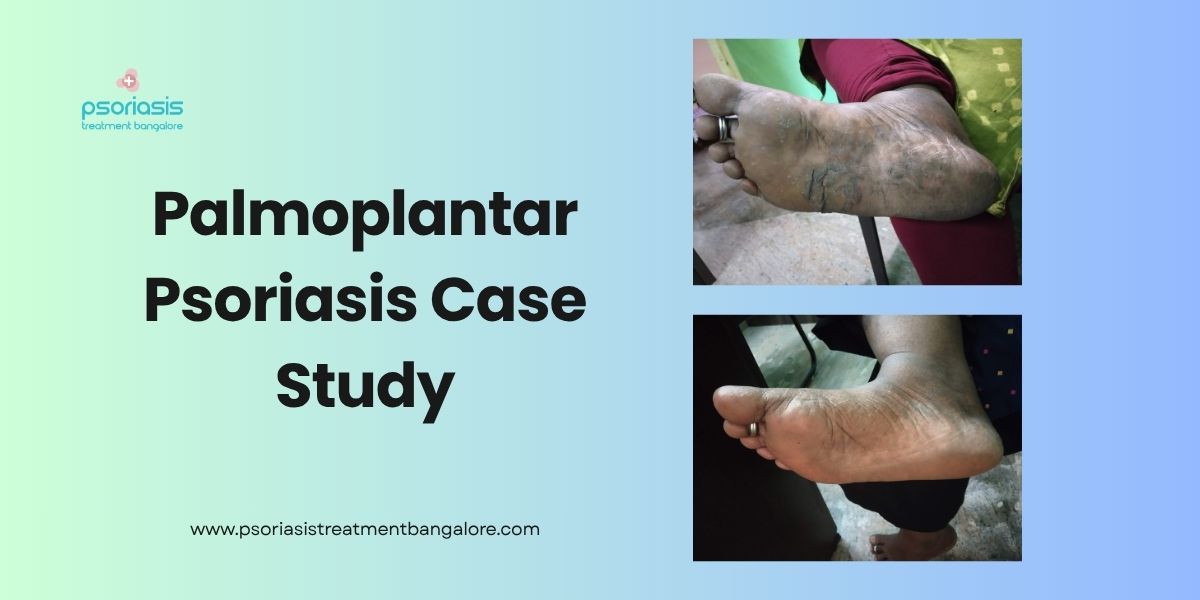
Palmoplantar Psoriasis: A Patient’s Journey to Long-Term Remission Through Ayurvedic Treatment
Palmoplantar psoriasis is a chronic, often disabling condition that affects the palms of the hands and soles of the feet. Because these areas are in constant use, even a small amount of visible disease can cause disproportionate pain, cracking, and disruption to everyday life.
This article shares a real patient case from our clinic, alongside a closer look at what palmoplantar psoriasis actually is and how Ayurvedic care approaches it.
Understanding Palmoplantar Psoriasis
Palmoplantar psoriasis is a localized form of psoriasis confined to the palms and soles. It typically presents as red, scaly, thickened patches, often accompanied by painful fissures, or as recurring pustules, depending on which clinical pattern is present.
Because the hands and feet face constant mechanical stress from gripping, walking, and standing, this form of psoriasis tends to be more painful and more disruptive to daily function than plaque psoriasis affecting less-used areas of the body. Research also shows it’s frequently more resistant to standard treatment than psoriasis elsewhere, making a well-planned, sustained treatment approach especially important.
Why This Condition Is Genuinely Difficult to Treat
Palmoplantar disease has a well-documented reputation among dermatologists for being harder to bring under lasting control than plaque psoriasis elsewhere on the body. Thicker skin on the palms and soles limits how well topical treatments penetrate, while the constant use of the hands and feet makes healing skin more prone to re-injury during the recovery process itself.
This is exactly why we take a broader, whole-body approach rather than focusing on the palms and soles in isolation. Addressing digestion, immune balance, and lifestyle triggers alongside local skin care reflects the reality that palmoplantar psoriasis, like psoriasis generally, is a systemic condition with a local expression, not a purely local skin problem.
Patient Case Study
The patient discussed here was a woman in her mid-forties who had been living with plantar psoriasis for approximately a year and a half before coming to our clinic. She had been on conventional allopathic medication throughout this period, with only partial and gradually diminishing benefit.
How Her Condition Progressed
Over time, painful cracks began appearing on her feet, making walking increasingly difficult. She also began experiencing stiffness and discomfort in her feet each morning, and despite consistent use of her prescribed medication, her symptoms continued to worsen gradually rather than improve.
Roughly a year into her conventional treatment, she noticed mild discoloration developing on her palms as well. A dermatologist confirmed this as palmar involvement of the same underlying condition, and explained that psoriasis is a chronic disease that can be managed and controlled, but does not currently have a guaranteed permanent cure, a point consistent with current dermatological understanding of the condition.
Seeking an Alternative Approach
Concerned about her condition progressing further and affecting more of her body, she began researching psoriasis more thoroughly and exploring additional treatment options beyond conventional medication alone. This research led her to our clinic.
1st Visit – Before starting Ayurvedic treatment for palmoplantar psoriasis


5 months later Stopping Treatments – Latest images taken during recent followup


Her Treatment Journey With Us
After a detailed assessment, she began a personalized Ayurvedic treatment plan, combined with specific dietary changes and lifestyle modifications tailored to her individual constitution and triggers. She continued this treatment consistently for approximately seven months, at which point her symptoms had cleared significantly enough that active treatment was concluded, with a transition to preventive guidance.
She was advised to continue avoiding known personal triggers and to maintain the dietary and lifestyle habits established during treatment, since sustaining these changes plays a meaningful role in reducing the likelihood of symptoms returning.
Progress Over Time
Photographs taken at her first visit, before starting Ayurvedic treatment, showed active plantar involvement with visible thickening, discoloration, and fissuring. Follow-up photographs taken roughly five months after concluding active treatment showed substantial clearance of these symptoms, with healthier-looking skin across the previously affected areas.
What This Case Illustrates
This patient’s outcome reflects the kind of significant, sustained symptom clearance that thoughtful, consistent Ayurvedic care can help achieve for palmoplantar psoriasis in appropriate cases. Individual results vary considerably from patient to patient, based on disease severity, duration, overall health, and how closely trigger-avoidance and lifestyle guidance are followed, and this single case should be understood as one patient’s experience rather than a guaranteed outcome for every patient.
What her experience does reflect, and what we see consistently in appropriately selected cases, is that sustained attention to root-cause factors, digestion, detoxification, immune balance, and trigger avoidance, alongside targeted local skin care, can produce meaningful, lasting improvement even in cases that had been progressing despite conventional treatment alone.
The Ayurvedic Approach to Palmoplantar Psoriasis
Ayurveda approaches palmoplantar psoriasis, like psoriasis generally, as a manifestation of deeper systemic imbalance rather than an isolated local skin problem. This traditional framework offers a complementary lens alongside the modern clinical understanding of the condition.
Correcting Doshas Through Medication
According to Ayurvedic principles, appropriately selected internal medications help correct the underlying dosha imbalances believed to drive chronic skin conditions like psoriasis. This forms the internal foundation of treatment, working alongside external, topical care.
Detoxification
Detoxification protocols are used to help remove accumulated toxins (Ama) believed to circulate through the body and disturb healthy tissue function. This is considered a key step in addressing the root cause of symptom flares, rather than managing visible symptoms alone.
Diet and Lifestyle
Correct food habits are considered essential for preventing the ongoing accumulation of toxins that can perpetuate chronic inflammatory skin conditions. Personalized dietary guidance, tailored to the individual’s constitution and known triggers, forms an ongoing part of both active treatment and long-term maintenance.
Rejuvenation and Immune Support
Rejuvenative (Rasayana) medications are used to nourish tissues and support overall immune balance, with the goal of reducing the likelihood of recurrence once symptoms have cleared. This forward-looking, prevention-oriented component is a defining feature of the Ayurvedic approach, extending care beyond the point of visible symptom resolution.
Why Consider Ayurveda for Palmoplantar Psoriasis?
Holistic Healing. Ayurvedic treatment focuses on the whole person rather than the visible symptoms in isolation, aiming for well-supported, sustained improvement rather than short-term symptom suppression alone.
Personalized Care. Treatment is customized based on an individual’s unique constitution and specific pattern of imbalance, rather than applying a single fixed protocol to every patient.
Natural, Gentle Approach. Ayurveda uses natural formulations generally associated with a gentler side-effect profile than some conventional treatments, making it a reasonable option for patients seeking a non-steroidal, longer-term management approach.
A Root-Cause Focus. Ayurvedic care specifically addresses underlying contributing factors such as stress, digestion, and lifestyle triggers, aiming for a more comprehensive approach alongside symptom management.
It’s worth noting honestly that Ayurvedic treatment works best as part of a well-coordinated care plan, and patients on conventional medication should discuss any changes to their treatment approach with both their dermatologist and Ayurvedic physician, rather than switching treatments abruptly on their own.
About Our Clinic
At Psoriasis Treatment Center Bangalore, we understand that psoriasis is more than a skin condition; it can significantly affect a person’s overall wellbeing, confidence, and daily function. That’s why our care goes beyond symptom treatment alone, aiming to genuinely improve quality of life for every patient we see.
Dr. Chaithanya KS is a highly regarded specialist with over 20 years of experience diagnosing and treating psoriasis and its associated complications, making him one of the most trusted names in this field of practice. Throughout his career, he has worked with countless patients to manage both the physical and emotional challenges that come with this chronic condition, using advanced, personalized treatment methods tailored to each individual’s needs, whether through medication, lifestyle adjustment, or ongoing long-term support.
Our clinic combines thorough clinical assessment with empathetic, patient-centered care, aiming to deliver a genuinely holistic treatment experience. From initial diagnosis through ongoing follow-up, our goal is to provide care that empowers patients to manage their condition effectively and live fuller, more comfortable lives. (To understand more about how palmoplantar psoriasis is diagnosed and treated across both conventional and complementary approaches, see our complete guide, “Palmoplantar Psoriasis: A Complete, Research-Based Guide.“)
Individual treatment outcomes vary based on disease severity, duration, overall health, and adherence to treatment and lifestyle guidance. This article describes one patient’s individual experience and should not be understood as a guarantee of similar results for every patient. Psoriasis is a chronic condition; while significant, sustained symptom clearance is achievable for many patients, it does not currently have a guaranteed permanent cure, and anyone considering a change to their treatment approach should consult with a qualified physician first.