
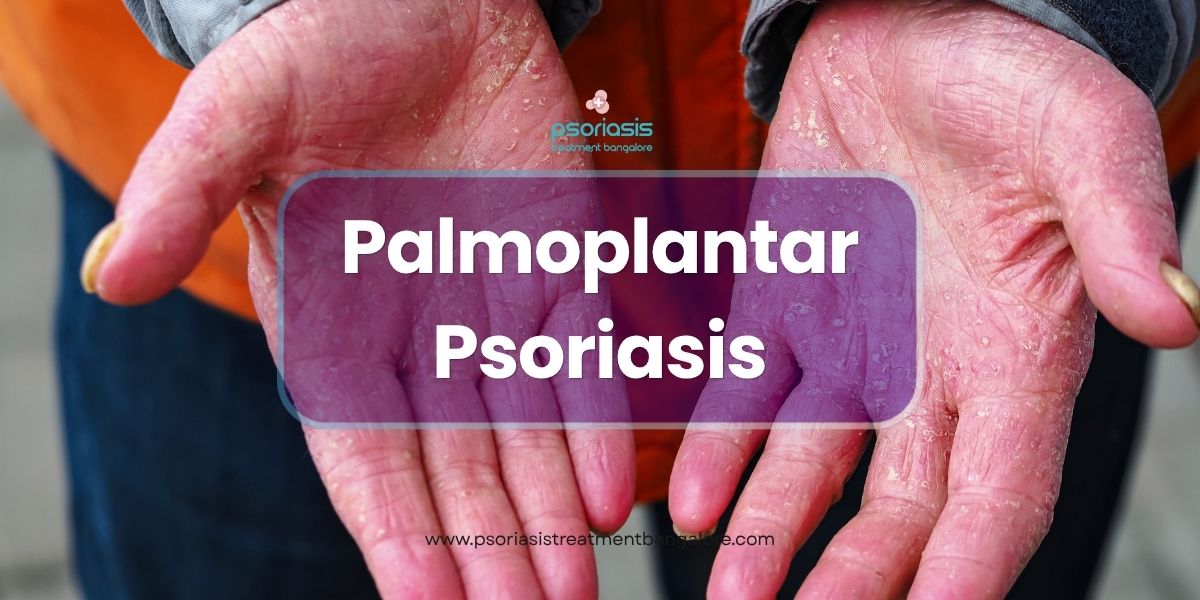
Palmoplantar Psoriasis: A Complete, Research-Based Guide
Palmoplantar psoriasis affects two of the most functionally important, constantly used parts of the body: the palms and the soles. Despite covering a relatively small body surface area, it consistently ranks among the most disabling and difficult-to-treat forms of psoriatic disease.
This guide brings together current dermatology research on what palmoplantar psoriasis actually is, how it differs from a closely related but genetically distinct condition, and what the evidence shows about treating it effectively.
What Is Palmoplantar Psoriasis?
Palmoplantar psoriasis refers to psoriasis specifically localized to the palms of the hands and soles of the feet. As introduced in our types-of-psoriasis guide, it can present in more than one clinical pattern, and understanding which pattern is present directly shapes treatment decisions.
Two Distinct Clinical Patterns
Dermatology literature recognizes a genuine split within palmoplantar disease, and this distinction runs throughout this entire guide. Palmoplantar psoriasis and palmoplantar pustulosis are chronic skin diseases with a large impact on patient quality of life, and while related, current research treats them as distinct clinical entities with important differences in epidemiology, genetics, histopathology, and pathogenesis.
The first, more straightforward pattern is hyperkeratotic palmoplantar psoriasis, which looks like classic plaque psoriasis, well-demarcated, red, scaly plaques, simply relocated to the palms and soles. The second is palmoplantar pustulosis (PPP), a genuinely different-looking condition involving sterile, pus-filled pustules rather than typical scaly plaques.
Palmoplantar Psoriasis vs. Palmoplantar Pustulosis: Same Disease or Not?
This is one of the more actively debated classification questions in modern dermatology, and it’s worth understanding clearly rather than glossing over. The answer genuinely affects how a patient’s condition should be evaluated and treated.
The Case for PPP Being a Separate Disease
A growing body of research argues palmoplantar pustulosis shouldn’t be classified as psoriasis at all. Although initially thought to be a variant of psoriasis, PPP is now regarded by many researchers as a separate entity rather than a disease on the psoriasis spectrum, and despite the fact that some patients have psoriasiform plaques on other parts of the body, these lesions are not considered typical psoriatic plaques.
The genetic evidence supporting this separation is fairly compelling. PPP is not associated with the major psoriasis susceptibility locus PSORS1 or HLA-C:06:02, suggesting a genetically distinct entity from plaque psoriasis, according to DermNet’s clinical reference. Instead, genetic mutations involving IL36RN, CARD14, ATG16L1, and AP1S3 may be associated with PPP specifically.
Why the Eccrine Sweat Gland Matters So Much
The anatomical explanation for why PPP concentrates specifically on palms and soles centers on a structure unique to this skin. Eccrine sweat glands and the acrosyringium, the point where the sweat duct opens onto the skin surface, play the central role in the pathogenesis of PPP, and this is precisely why the condition doesn’t appear anywhere else on the body with the same character.
It is believed that the primary target of inflammation in PPP is the acrosyringium, the eccrine sweat gland apparatus, according to a structured review of the condition’s burden. This is fundamentally different from how plaque psoriasis develops elsewhere on the body, where the hair follicle and interfollicular epidermis, not sweat gland structures, are the primary site of pathology.
The Case for Keeping Them Together
Despite this genetic and anatomical evidence, the classification debate isn’t fully settled, and there are practical reasons to discuss both conditions together. Both entities can respond to similar treatments and have a similar impact on quality of life, and many patients and clinical trials continue to use overlapping terminology and outcome measures for both.
Because of this overlap, this guide covers both conditions, while being clear about which research applies specifically to which pattern.
How Common Is Palmoplantar Psoriasis?
Precise prevalence figures for palmoplantar disease specifically are harder to pin down than for psoriasis generally, partly because of the classification debate described above. Still, several consistent demographic patterns emerge across the available research.
Who Develops Palmoplantar Pustulosis?
Unlike plaque psoriasis, which affects men and women in roughly similar numbers, PPP shows a pronounced gender skew. PPP is a disease with strong female predominance, a pattern confirmed across multiple independent studies in different countries.
Age of onset also follows a fairly consistent pattern. PPP most commonly develops in mid-adulthood, and unlike plaque psoriasis, family history of psoriasis is present in only a minority of cases, reinforcing the genetic distinction discussed above.
What Causes Palmoplantar Psoriasis and PPP?
The underlying biology differs meaningfully between the hyperkeratotic and pustular patterns of palmoplantar disease, echoing the broader classification question discussed above.
The Overwhelming Role of Smoking
If there’s one environmental factor that dominates palmoplantar pustulosis research more than any other, it’s tobacco smoking. As covered in depth in our “Smoking and Psoriasis” guide, this association is among the strongest of any environmental risk factor identified anywhere in dermatology.
The majority of patients with palmoplantar pustulosis are cigarette smokers, with 70% to 90% of patients being current or former smokers, and smoking is also a disease-aggravating factor. The proposed mechanism connects directly back to the sweat gland pathology described above.
It is thought that in individuals with PPP, nicotine is secreted into eccrine glands to promote inflammation and alter the local immune response, and activation of nicotinic acetylcholine receptors by nicotine specifically, rather than by the body’s own acetylcholine, may lead to the accumulation of eosinophils and neutrophils and consequently to pustule formation. Nicotine appears to affect nearby keratinocytes as well, causing increased keratosis of the excretory ducts, contributing to the scaling seen alongside pustules.
The Innate and Adaptive Immune Response
Beyond smoking as a trigger, the immune biology driving PPP involves several of the same inflammatory pathways discussed in our “Inflammation and Psoriasis” guide, applied to this specific anatomical site. In PPP, both the innate and adaptive immune systems are activated, and acrosyringeal expression of IL-17 has been demonstrated, indicating that the eccrine sweat gland is an active, immune-competent component of the skin barrier, not merely a passive structure being attacked from outside.
Specific cytokines have been directly measured in affected tissue. Interleukin-8, IL-36 gamma, and IL-36 receptor antagonist all play important roles in the pathogenesis of pustular psoriasis, with researchers specifically studying their relationship to acrosyringeal changes and pustule formation in PPP tissue samples.
Dental and Focal Infections
An unusual but recurring finding in PPP research involves a genuinely unexpected trigger: infections centered in the mouth and throat. Dental infection has been documented as a triggering factor in palmoplantar pustulosis, a pattern that echoes the tonsillar mechanism discussed in our “Smoking and Psoriasis” guide’s coverage of PPP.
This connection has led some clinicians to specifically screen for and treat dental or tonsillar infections in patients with treatment-resistant PPP, though this remains a more specialized, second-line consideration rather than a first-line diagnostic step for every patient.
Mechanical Trauma and Friction
Beyond smoking and infection, physical factors specific to the hands and feet contribute to disease activity. Environmental factors such as manual or repetitive trauma, irritants, and friction have been associated with palmoplantar pustulosis, echoing the Koebner phenomenon discussed in our “What Causes Psoriasis?” guide, applied to skin that faces near-constant mechanical stress from gripping and walking.
Medication Triggers
Certain medications are specifically documented to trigger or worsen palmoplantar disease. Drug-induced cases have been particularly associated with TNF-alpha inhibitors, an important and somewhat ironic finding, since TNF-alpha inhibitors are themselves used to treat plaque psoriasis elsewhere on the body.
Both plaque psoriasis and palmoplantar pustulosis may be precipitated by lithium, and infliximab specifically can worsen the disease, potentially related to the role of TNF-alpha in normal eccrine sweat duct function. Anyone developing new palm or sole pustules while on a biologic medication for another condition should raise this possibility with their prescribing physician promptly.
Comorbidities Linked to Palmoplantar Disease
Beyond the skin itself, palmoplantar pustulosis in particular has been linked to a distinctive comorbidity profile, somewhat different from the metabolic and cardiovascular pattern seen in plaque psoriasis and discussed in our pillar guide.
Thyroid Disease
Thyroid dysfunction shows up repeatedly across PPP research, more prominently than in plaque psoriasis generally. There is an increased incidence of autoantibodies to thyroid antigens in palmoplantar pustulosis patients, and multiple independent studies have documented thyroid disease as a recurring comorbidity.
Figures vary somewhat between study populations. One study found thyroid disease in 8% of PPP patients, alongside gluten sensitivity in 1% and type 2 diabetes in 10%, while other cohorts have reported thyroid involvement at similar or somewhat higher rates.
Metabolic Comorbidities
Metabolic disease patterns in PPP show interesting variation across different populations studied. Rates of diabetes, hypertension, and hyperlipidemia reported in an Austrian cohort were 18.6%, 38.0%, and 32.4% respectively, notably higher than in a Japanese cohort, where the same conditions were found at 7.7% to 9.3%, 17.3% to 18.3%, and 21.7% to 22.4%. This geographic variation suggests both genetic and environmental or lifestyle factors likely contribute to comorbidity risk.
Diabetes specifically has shown a particularly strong, statistically robust association in controlled research. One study found diabetes mellitus was significantly more frequent in PPP patients than in age- and gender-matched healthy controls, with an adjusted odds ratio of 8.7, a substantial difference that shouldn’t be dismissed as coincidental.
Joint and Bone Involvement
PPP carries its own distinctive relationship with joint and bone disease, separate from the nail-enthesis connection discussed in our nail psoriasis pillar guide. The prevalence of psoriatic arthritis in PPP patients has been reported at 8.6% to 26% across different study populations.
A particularly distinctive bone-related finding is specific enough to warrant its own diagnostic category. Sternocostoclavicular ossification, an unusual bone change affecting the joint where the collarbone meets the breastbone, occurs in about 10% of palmoplantar pustulosis cases, and this finding, alongside pustulosis, forms part of a recognized cluster of conditions called SAPHO syndrome, mentioned in our pillar guide’s discussion of unique psoriasis presentations.
Nail Involvement
Nail changes are genuinely common in PPP, though estimates vary by study population. Nail involvement in PPP ranges from 30% to 76% across different studies, with a Seoul-based study finding a 66.3% prevalence and a direct correlation between nail changes and overall disease severity, with onycholysis and crumbling as the predominant findings.
Regional data suggests somewhat lower, though still substantial, rates elsewhere. In Northern European populations, nail involvement has been reported in roughly one-third of PPP cases, with subungual pustulation as a distinguishing feature. This connects directly to the broader nail psoriasis biology discussed in our dedicated nail psoriasis pillar guide.
Clinical Presentation
Hyperkeratotic Palmoplantar Psoriasis
This pattern looks like a localized version of classic plaque psoriasis: well-demarcated, red, thickened, scaly plaques confined to the palms and soles. Painful cracking and fissuring is common, given the mechanical stress these areas face daily, a topic covered in more practical depth in our “Camel Foot Appearance in Psoriasis” guide’s discussion of plantar cracking and fissure care.


Palmoplantar Pustulosis
PPP is characterized by scattered clusters of pinhead-sized, sterile pustules, primarily located on the thenar, hypothenar, or central areas of the palms, occurring either symmetrically or asymmetrically. The pustules, typically 1 to 10 millimeters in size, arise on an erythematous base and may be associated with crusting, desquamation, fissures, and hyperkeratosis.
The disease course tends to be genuinely chronic and cyclical rather than a one-time eruption. Pustules typically go through cycles of forming, turning brown, and shedding with the overlying skin, only for new crops to appear, creating an ongoing, often frustrating pattern of flare and partial resolution.

Measuring Severity: The PPPASI Score
Just as PASI and NAPSI provide standardized severity measurement for skin and nail disease respectively, palmoplantar disease has its own dedicated scoring system, used consistently across the clinical trials discussed later in this guide.
How PPPASI Works
PPPASI is an abbreviation that stands for both Palmoplantar Pustulosis Area and Severity Index and Palmoplantar Psoriasis Area and Severity Index, reflecting the overlapping terminology used across both conditions in current research literature. Like PASI, it scores the characteristic features of disease activity, erythema and scaling for the psoriatic pattern, pustule count and density for the pustular pattern, weighted by the area of palm and sole surface involved.
Clinical trials typically report outcomes using this same percentage-improvement framework introduced in our “Creating Treatment Goals” guide. PPPASI-50 and PPPASI-75 indicate 50% and 75% improvement from baseline respectively, giving researchers and clinicians a consistent way to compare how well different treatments perform.
Treatment: What the Evidence Actually Shows
Palmoplantar disease has a well-earned reputation for being difficult to treat, often more resistant to standard psoriasis therapies than plaque disease elsewhere on the body. Both palmoplantar psoriasis and palmoplantar pustulosis are frequently refractory to treatment, generally described as a genuine therapeutic challenge even by specialists.
First-Line Treatment
Classical management of mild to moderate palmoplantar pustulosis and palmoplantar psoriasis relies on potent topical corticosteroids, phototherapy, and/or acitretin, though these have proven insufficient for long-term control of more extensive disease. This mirrors the topical-first approach discussed throughout our pillar guide, adjusted for the thicker, more resistant skin found on palms and soles.
Phototherapy Results
Targeted phototherapy has shown genuinely strong results in dedicated trials, particularly for more resistant disease. A systematic review found excimer laser phototherapy demonstrated high efficacy for severe disease, achieving a PPPASI-75 response rate of 95.0%, while PUVA combined with retinoids or fumaric acid esters worked well for milder disease, reaching PPPASI-90 response rates of 90.0% and 81.8% respectively.
Biologic Therapy: A Careful, Evidence-Based Comparison
Biologic selection for palmoplantar disease deserves particular care, since efficacy varies considerably between drug classes, and results for PPP specifically tend to run lower than for plaque psoriasis. Biologics for PPP are generally less effective than for plaque psoriasis, though secukinumab and guselkumab, targeting IL-17 and IL-23 respectively, have shown better results compared to other biologics tested in trials.
Secukinumab has dedicated, PPP-specific trial data worth reviewing directly. In a phase 3b randomized trial focused specifically on PPP patients, 52.2% of those receiving 300 mg secukinumab achieved ppPASI-50 at week 16, compared to 32.9% with placebo, while 26.6% achieved ppPASI-75, outperforming both the lower-dose group and placebo.
Guselkumab has shown some of the strongest dedicated trial results for PPP specifically. In a phase II study of 50 patients with moderate-to-severe PPP treated with guselkumab over 24 weeks, the primary endpoint was met with a significant median PPPASI reduction of 59.6% compared to baseline, with 66.0% of patients achieving PPPASI-50 and 34.0% achieving PPPASI-75.
Network meta-analyses comparing multiple agents head-to-head have reinforced guselkumab’s relative standing. Based on ranking scores from one network meta-analysis, guselkumab 100 mg was found most effective for physician global assessment improvement and for PPPASI-75 response specifically, among the biologics compared.
Ixekizumab has shown notably fast results in broader plaque psoriasis trials that included palmoplantar involvement. In a phase 3 trial of 351 psoriasis patients, ixekizumab produced 50% of patients achieving ppPASI-75 by week 4, with effectiveness progressively increasing to 90% of patients reaching ppPASI-75 by week 12, among the faster onset profiles reported for this specific outcome measure.
Which biologics tend to underperform for PPP specifically? Some agents, including anakinra, secukinumab in certain trial contexts, spesolimab, and RIST4721, either showed more limited results or did not meet their primary outcomes in dedicated PPP trials, a useful, honest reminder that PPP doesn’t always respond to the same agents, or at the same rate, as plaque psoriasis elsewhere on the body.
Newer Oral Options: JAK Inhibitors
A newer drug class has generated considerable interest for palmoplantar disease specifically, with encouraging early results. A systematic review of JAK inhibitors including tofacitinib, upadacitinib, baricitinib, and abrocitinib found a pooled PPPASI-50 response rate of 85.5% in PPP patients, with upadacitinib achieving the strongest result at 90.9%.
This is a genuinely encouraging figure, notably higher than many of the biologic response rates discussed above, though it’s worth noting this pooled analysis drew heavily on case reports and smaller case series rather than large randomized trials exclusively. By targeting multiple inflammatory pathways in PPP simultaneously, JAK inhibitors may prove more effective than biologics for this specific condition, though more research is still needed to confirm this pattern with stronger trial designs.
Newest Comparative Data
A large, dedicated 2026 network meta-analysis has provided the most direct, rigorous comparison of monotherapies across the palmoplantar spectrum to date. Drawing on 20 trials involving 2,030 patients across 23 active treatment comparisons, this Bayesian network meta-analysis specifically examined PPPASI outcomes at 12 to 16 weeks, providing one of the most comprehensive head-to-head efficacy comparisons available for this genuinely difficult-to-treat condition.
This kind of large-scale comparative research reflects a broader, encouraging trend: palmoplantar disease, long treated as a therapeutic afterthought compared to plaque psoriasis, is increasingly receiving the kind of dedicated, rigorous trial attention that has already transformed plaque psoriasis treatment over the past two decades.
A Balanced Note on Safety
With any biologic comparison, effectiveness is only part of the picture. In the same network meta-analysis, oral etretinate was associated with the most adverse events overall, while secukinumab 300 mg was associated with the highest rate of serious adverse events among the agents compared, a reminder that treatment selection should weigh safety alongside efficacy, exactly the individualized, physician-guided decision-making process emphasized throughout our pillar guide.
Quality of Life Impact
Despite covering a small fraction of total body surface area, palmoplantar disease carries an outsized burden, a pattern that echoes what we’ve documented for nail psoriasis in our dedicated nail psoriasis pillar guide.
Why the Impact Is So Disproportionate
The hands and feet are constantly in use, making it nearly impossible to simply avoid using affected skin the way one might protect a plaque elsewhere on the body. Impairment of quality of life can be significant, owing to symptoms such as burning, pain, itch, and bleeding from fissures, along with complications like subcutaneous skin infections such as erysipelas and cellulitis that might require hospital admission.
Functional impact extends into basic daily activities most people take entirely for granted. Severe eruptions might impair the capacity to work, walk, or exercise, and this functional burden has been measured with real statistical rigor rather than assumed.
Confirmed Correlation Between Severity and Quality of Life
Researchers haven’t just assumed palmoplantar disease is disruptive; they’ve measured it directly and confirmed the relationship statistically. A cross-sectional study demonstrated a direct correlation between disease severity, measured by PPPASI, and quality-of-life impairment, measured by DLQI, a finding later confirmed in a larger study including UK and Northern European patients.
Notably, this burden doesn’t distribute evenly across all patients. PPP severity tends to be higher in female patients compared to male patients, and in current or past smokers compared to those who have never smoked, reinforcing the smoking-severity relationship discussed throughout this guide.
Living With Palmoplantar Psoriasis
Alongside medical treatment, several practical measures can meaningfully support day-to-day comfort and function while more definitive treatment takes effect.
Protecting the Hands and Feet From Trauma
Given the mechanical trauma and friction triggers discussed earlier in this guide, minimizing unnecessary hand and foot stress is a reasonable, low-cost supportive measure. Padded gloves for manual tasks and well-cushioned, properly fitted footwear, discussed in more practical detail in our “Camel Foot Appearance in Psoriasis” guide, can reduce Koebner-related flare triggers.
Smoking Cessation as a Primary Intervention
Given how overwhelmingly strong the smoking-PPP connection is, discussed throughout this guide and in our dedicated “Smoking and Psoriasis” guide, cessation deserves particular emphasis for anyone with palmoplantar pustulosis specifically. This isn’t simply general health advice; for this specific condition, it’s one of the most directly actionable, evidence-supported interventions available.
Moisture Management and Fissure Care
The same keratolytic and moisturizing approach discussed in our camel foot appearance guide, using urea-based creams and protecting active fissures from further trauma, applies directly to palmoplantar psoriasis regardless of which clinical pattern is present. Consistent daily care between flares helps maintain skin barrier function and may reduce flare frequency over time.
Screening for Associated Comorbidities
Given the thyroid, metabolic, and joint associations discussed throughout this guide, patients with palmoplantar disease, particularly the pustular pattern, may benefit from proactive screening for these specific comorbidities, beyond the general psoriasis comorbidity screening discussed in our pillar guide and psoriasis diagnosis guide. Raising this directly with your dermatologist or primary care physician, rather than waiting for symptoms to emerge, reflects the same proactive monitoring philosophy emphasized throughout this entire content series. (For a full walkthrough of psoriasis treatment options generally, see our complete guide, “What Is Psoriasis? A Complete Guide to Causes, Symptoms, and Treatment.”)
Check Palmoplantar Psoriasis Case Study
Frequently Asked Questions
1. Is palmoplantar pustulosis the same disease as psoriasis?
This remains genuinely debated. Growing genetic and anatomical evidence suggests PPP may be a distinct condition centered on the eccrine sweat glands rather than a true psoriasis variant, though both conditions share overlapping treatment approaches and quality-of-life impact.
2. Why does smoking matter so much for this specific condition?
Smoking is one of the strongest environmental associations documented in dermatology for PPP specifically, with 70% to 90% of patients being current or former smokers. Nicotine is believed to act directly on receptors near the eccrine sweat glands in the palms and soles, driving pustule formation.
3. What’s the difference between hyperkeratotic palmoplantar psoriasis and PPP?
Hyperkeratotic palmoplantar psoriasis looks like classic plaque psoriasis relocated to the palms and soles, with scaly, well-demarcated plaques. PPP instead involves sterile, pus-filled pustules, a visually and biologically distinct presentation.
4. Are biologics as effective for palmoplantar disease as for plaque psoriasis elsewhere?
Generally, no. Research consistently shows biologic response rates for PPP specifically tend to run lower than for plaque psoriasis, though certain agents like secukinumab and guselkumab have shown meaningfully better results than others tested.
5. What is PPPASI, and why does it matter?
PPPASI is a standardized severity scoring system used for both palmoplantar psoriasis and palmoplantar pustulosis, allowing objective tracking of treatment response. It’s the primary outcome measure used across the clinical trials discussed throughout current palmoplantar disease research.
6. Can palmoplantar psoriasis affect my ability to work?
Yes, potentially significantly. Research documents real functional impairment affecting the capacity to work, walk, or exercise in more severe cases, given how constantly the hands and feet are used in daily life.
7. Is there a connection between palmoplantar disease and thyroid problems?
Yes, particularly for palmoplantar pustulosis. Multiple studies have documented elevated rates of thyroid disease and thyroid autoantibodies in PPP patients compared to the general population.
8. Do JAK inhibitors work better than biologics for this condition?
Early research suggests JAK inhibitors may achieve higher response rates for PPP specifically compared to some biologics, with one pooled analysis showing an 85.5% PPPASI-50 response rate. This evidence base is still developing and draws partly on smaller case reports, so it shouldn’t be considered definitively superior yet.
9. Can dental infections really trigger palmoplantar pustulosis?
Yes, this connection has been documented in dermatology research, though it applies to a subset of patients rather than everyone with the condition. Screening for and treating dental or tonsillar infections is sometimes considered in treatment-resistant cases.
10. Should I quit smoking even if I’ve had palmoplantar pustulosis for years?
Yes. Research on smoking cessation and psoriasis, covered in our dedicated “Smoking and Psoriasis” guide, shows meaningful improvement is possible even in longstanding disease, and continued smoking is associated with both greater severity and worse quality of life in PPP patients specifically.
Sources and References
- “The Relative Efficacy of Monotherapies for Palmoplantar Pustulosis and Palmoplantar Psoriasis: A Network Meta-Analysis Study of the Palmoplantar Spectrum,” MDPI, 2026.
- “The Efficacy of Biologic Therapy for the Management of Palmoplantar Psoriasis and Palmoplantar Pustulosis: A Systematic Review,” ResearchGate.
- Alshareef et al., “The Efficacy and Safety of Non-Biologic and Biologic Treatments in Palmoplantar Pustular Psoriasis and Palmoplantar Pustulosis: A Systematic Review and Network Meta-Analysis,” Australasian Journal of Dermatology, Wiley, 2025.
- “Efficacy of Biologic Agents for Palmoplantar Psoriasis: A Systematic Review and Network Meta-Analysis,” Expert Review of Clinical Immunology, 2023.
- “Efficacy and Safety of Biological Agents to Treat Patients With Palmoplantar Pustulosis: A Systematic Scoping Review,” ScienceDirect.
- ClinicalTrials.gov, NCT02008890, “Palmoplantar Pustular Psoriasis Efficacy and Safety With Secukinumab,” Novartis Pharmaceuticals.
- “Efficacy of Tildrakizumab for the Treatment of Difficult-to-Treat Areas: Scalp, Nail, Palmoplantar and Genital Psoriasis,” PMC.
- “A Systematic Review of Recent Randomized Controlled Trials for Palmoplantar Pustulosis,” Taylor & Francis Online.
- “Biologics as a Novel Treatment Option for Palmoplantar Pustulosis: A Comprehensive Review,” PMC.
- “Palmoplantar Pustulosis (PPP),” Science.gov Topics.
- “Recent Advances in Palmoplantar Pustulosis,” PMC.
- “The Clinical, Humanistic, and Economic Burden of Palmoplantar Pustulosis: A Structured Review,” Taylor & Francis Online.
- DermNet, “Palmoplantar Pustulosis (Localised Pustular Psoriasis),” updated July 2025.
- “Clinical Characteristics and Associations of Palmoplantar Pustulosis: An Observational Study,” ScienceDirect, 2019.
- “Palmoplantar Psoriasis and Palmoplantar Pustulosis: Current Treatment and Future Prospects,” American Journal of Clinical Dermatology, Springer Nature, 2016.
- “Subclinical Hypothyroidism in Moderate-to-Severe Psoriasis: A Cross-Sectional Study of Prevalence and Clinical Implications,” PMC.
- Diagnosis, Screening and Treatment of Patients With Palmoplantar Pustulosis, Clinical, Cosmetic and Investigational Dermatology, Dove Medical Press, 2020.
- Pustulosis Palmaris Et Plantaris, ScienceDirect Topics.
This article is intended for general educational purposes and does not replace personalized medical advice. Anyone with hand or foot skin changes should consult a dermatologist for accurate diagnosis and an individualized treatment plan, since palmoplantar psoriasis and palmoplantar pustulosis, while related, may call for different diagnostic and treatment approaches.