Nail Psoriasis Treatment in Bangalore: Safe, Evidence-Informed, Long-Term Care
Nail psoriasis is a chronic, inflammatory manifestation of psoriasis that affects the fingernails and toenails. Unlike skin plaques, nail changes are often subtle at first, yet they can be genuinely painful, distressing to look at, and unusually stubborn to treat.
Because nails grow slowly and are structurally complex, nail psoriasis frequently persists even after skin lesions clear. If you’re searching for nail psoriasis treatment in Bangalore, this guide walks through what the condition actually is, what current research says about treating it, and how our clinic combines Ayurvedic care with careful, evidence-informed monitoring.
What Is Nail Psoriasis?
Nail psoriasis affects two distinct structures: the nail matrix, where the nail is actually formed, and the nail bed, the tissue beneath the visible nail plate. As covered in our “What Causes Psoriasis?” guide, the underlying process is immune-mediated inflammation that drives abnormal, accelerated cell growth, and the nail unit is not spared from this process.
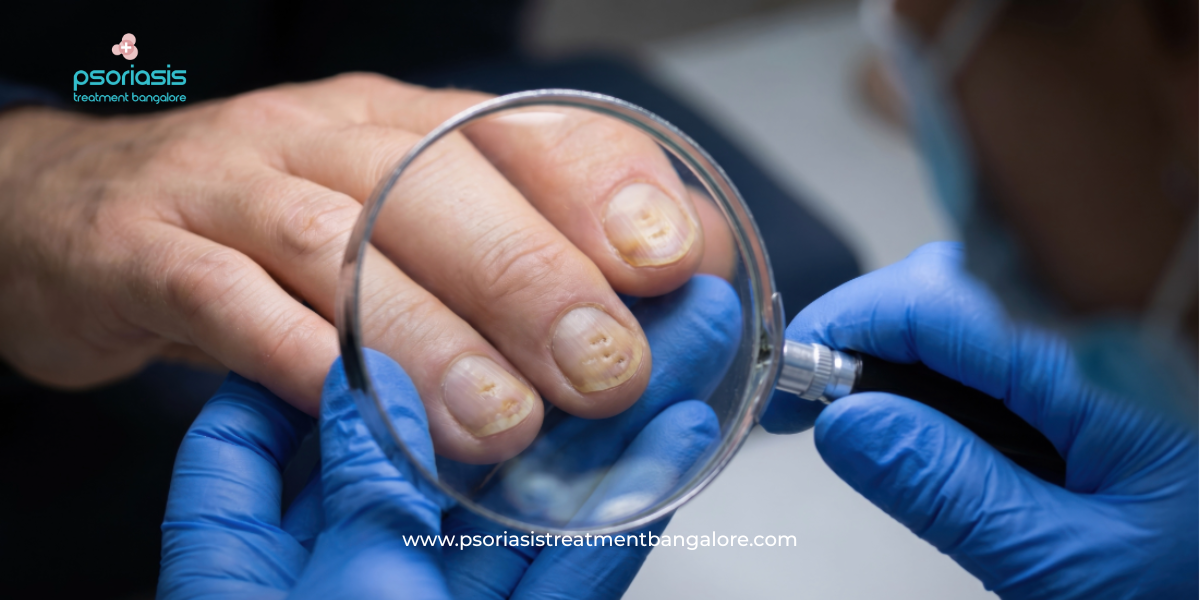
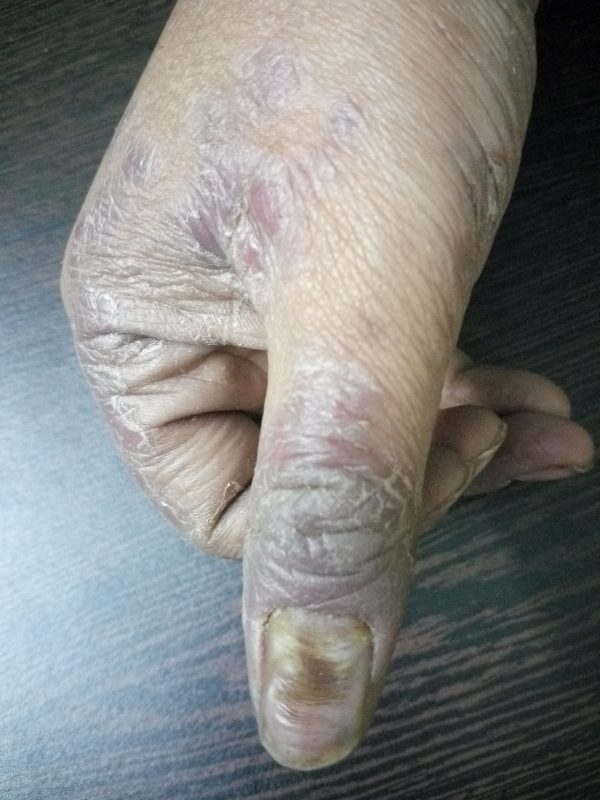
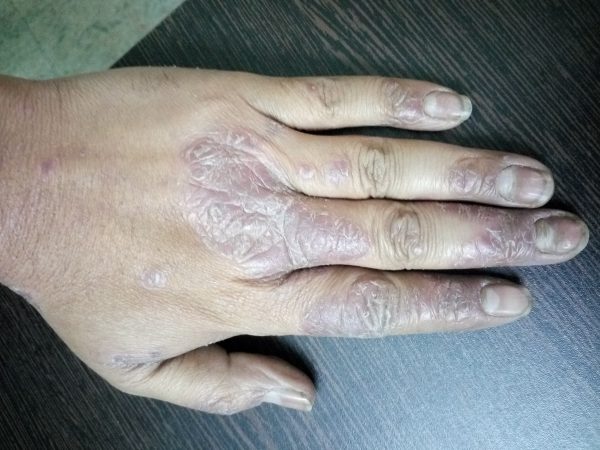
Nail matrix involvement typically shows up as pitting, ridging, or discoloration on the nail surface. Nail bed involvement tends to produce onycholysis, or lifting of the nail plate, along with subungual debris, crumbling, and thickening.



How Common Is Nail Involvement?
Nail changes are far from rare in psoriasis; they’re closer to the norm in more established disease. Nail disease is documented in up to 50% of patients with psoriasis and up to 80% of patients with psoriatic arthritis, according to a clinical review of psoriasis severity assessment. In some patients, nail changes appear before any skin plaques develop at all, which is one reason isolated nail symptoms are often misread as a fungal infection rather than psoriasis.
Why Accurate Diagnosis Matters
Several other conditions can mimic nail psoriasis closely enough to cause real diagnostic confusion. These include fungal nail infections (onychomycosis), nail eczema, lichen planus, alopecia areata, and simple trauma-related nail changes.
Distinguishing between these matters enormously, since treatment approaches differ substantially. A topical steroid that helps psoriatic nails, for instance, will do nothing for a fungal infection and may even allow it to spread further.
What a Thorough Diagnostic Workup Includes
A careful evaluation typically involves clinical examination of the nail matrix and nail bed, dermoscopy or magnified inspection, and fungal culture or KOH testing to rule out infection when the picture is unclear. As detailed in our psoriasis diagnosis guide, assessment of skin and joint involvement elsewhere on the body also helps confirm the diagnosis, since isolated nail changes rarely occur in total isolation from the rest of a patient’s psoriatic disease pattern.
At our clinic, this differential diagnosis process is a standard, non-negotiable part of the initial evaluation, performed before any treatment plan is proposed. Skipping this step is one of the most common reasons nail treatment fails: patients spend months treating the wrong condition entirely.
Measuring Nail Psoriasis Severity: The NAPSI Score
Dermatology researchers use a specific, standardized scoring system to track nail psoriasis over time, much like PASI is used for skin disease. Understanding this tool helps explain how a genuinely evidence-based clinic monitors treatment progress rather than relying on subjective impressions alone.
How NAPSI Works
The Nail Psoriasis Severity Index (NAPSI) is a physician-administered tool that evaluates the nail matrix and nail bed separately for each fingernail, scoring characteristic features like pitting, leukonychia, and crumbling in the matrix, and onycholysis, splinter hemorrhages, and subungual hyperkeratosis in the bed. Each nail receives a score between 0 and 8 based on how many quadrants show signs of psoriasis, and these scores are summed across all evaluated nails to produce a total score.
This scoring approach matters clinically because it turns “the nails look a bit better” into an objective, trackable number. Research has shown a strong, positive correlation between NAPSI scores and the Dermatology Life Quality Index, confirming that nail severity meaningfully tracks with how much the condition affects a patient’s daily life.
Why Nail Psoriasis Is So Difficult to Treat
Nail psoriasis has a well-earned reputation among dermatologists as one of the hardest manifestations of the disease to resolve. Several structural and biological factors explain why.
The Nail Plate Is a Physical Barrier
Topical treatment of nail psoriasis is challenging due to limited penetration through the nail plate to the diseased tissue underneath, combined with poor patient adherence over the required treatment duration, according to a review published in Rheumatology and Therapy. Unlike skin, where a cream sits directly on affected tissue, the nail plate itself blocks most topical medication from ever reaching the inflamed matrix or bed.
Skin Clearance Doesn’t Guarantee Nail Clearance
This is one of the more frustrating patterns in psoriasis care, and it’s well documented in the research. Traditional systemic therapies may achieve complete skin clearance, yet nail psoriasis frequently persists regardless, and physicians have often considered systemic therapy inappropriate for nail-only disease in the absence of significant skin involvement.
Nails Simply Grow Slowly
Even with a treatment that’s working perfectly, visible improvement takes time because of basic nail biology. Fingernails grow at an average rate of roughly 3.47 millimeters per month and take about four to six months to fully regrow from base to tip, while toenails grow at less than half that rate, around 1.62 millimeters per month, and can take twelve to eighteen months for complete regrowth.
This single biological fact explains why patience is not optional in nail psoriasis care; it’s a genuine physiological constraint. No treatment, conventional or Ayurvedic, can make a new, healthy nail appear faster than the nail matrix can physically produce it.
Conventional Treatment Options: What the Evidence Shows
Topical Corticosteroids and Vitamin D Analogues
Topical steroids applied to the nail folds and under the nail edge can meaningfully reduce inflammation in milder cases. In one controlled study, twice-weekly application of clobetasol nail lacquer over 16 weeks produced a 51% improvement in modified NAPSI scores compared to baseline, though no significant difference was found between different steroid concentrations.
Vitamin D analogues like calcipotriol are often used alongside steroids to help normalize the abnormal cell turnover happening in the nail matrix. These combinations tend to work better together than either alone, though penetration through the nail plate remains a limiting factor for both.
Intralesional Steroid Injections
For more resistant cases, injecting corticosteroid directly into the nail matrix can be genuinely effective. Studies of intralesional triamcinolone typically involve monthly injections over four to six months, since that’s approximately the time needed for the nail to fully regrow and for results to become visible.
This approach is more invasive and can be uncomfortable, which is why it’s generally reserved for adults with more significant nail involvement rather than used as a first-line option, and it is not appropriate for children.
Systemic Medications and Biologics
For moderate to severe nail involvement, particularly alongside skin or joint disease, systemic and biologic therapies are often the most effective option available. Research comparing these options directly gives useful, practical guidance on what tends to work best.
A systematic review found that at 24 weeks, brodalumab achieved the highest mean NAPSI improvement at 76.9%, followed by etanercept at 74% and ixekizumab at 70.5%, while adalimumab and ixekizumab were associated with the greatest likelihood of complete nail clearance. Other biologics have shown strong results as well.
In the TRANSFIGURE trial, secukinumab produced a 37.9% to 45.3% reduction in mean NAPSI score by week 16, compared to just 10.8% with placebo. Newer IL-23 inhibitors have also shown promise in difficult-to-treat sites. In a retrospective analysis of tildrakizumab used specifically for difficult-to-treat psoriasis locations including nails, scalp, and palms, disease severity scores showed meaningful improvement between baseline and 28 weeks of treatment.
It’s worth noting honestly that nail response and skin response don’t always move in perfect lockstep, and choosing the right biologic for nail-predominant disease is a genuinely specialized decision. This is exactly the kind of choice that benefits from the treat-to-target framework described in our “Creating Treatment Goals” guide, applied specifically to NAPSI rather than PASI alone.
Phototherapy
Light-based therapy, including PUVA, is sometimes used for nail psoriasis, but its usefulness is genuinely limited once nails become significantly thickened, since light penetration faces many of the same barrier problems topical treatments do. It’s rarely a primary treatment for nail-predominant disease for this reason.
The Ayurvedic Perspective on Nail Psoriasis
Ayurveda approaches nail psoriasis as a manifestation of deeper systemic imbalance rather than treating it as an isolated local nail problem. This traditional framework offers a different, complementary lens through which to understand chronic, relapsing inflammatory conditions.
The Traditional Framework
According to Ayurvedic principles, nail psoriasis is understood to arise from a Vata and Kapha dosha imbalance, compounded by weakened digestive fire (Agni), which is believed to allow toxin formation (Ama) to build up and circulate through the body’s tissues (Dhatus), including skin and nails. This is a traditional explanatory model rooted in centuries of Ayurvedic practice, distinct from the immune-pathway explanation covered in our “Inflammation and Psoriasis” guide, and it should be understood as a complementary framework rather than a replacement for that biological understanding.
Rather than aiming to suppress visible symptoms alone, this approach focuses on restoring internal balance through improved digestion, elimination of accumulated toxins, dosha balancing, and support for healthy tissue formation. Patients often find this systemic, root-cause-oriented philosophy appealing precisely because it addresses the whole person rather than treating the nail in isolation.
What This Means in Practice
This traditional model works alongside, rather than in place of, the diagnostic rigor and monitoring standards described throughout this guide. Our approach integrates this Ayurvedic understanding with careful clinical tracking, including NAPSI-style severity assessment, so that traditional treatment is guided by objective evidence of progress rather than assumption alone.
Our Nail Psoriasis Treatment Approach in Bangalore
Our clinic follows a personalized, evidence-informed model that combines Ayurvedic therapeutic principles with the clinical rigor described throughout this guide. The goal is genuine long-term nail health, not a quick cosmetic cover-up.
1. Detailed Assessment and Diagnosis
Every patient undergoes a clinical nail evaluation, dermoscopy or microscopic inspection, fungal testing when the picture is unclear, and an assessment of skin and joint involvement elsewhere on the body. We also take a detailed health history and trigger analysis, since factors discussed in our “What Causes Psoriasis?” guide, like infection, stress, and skin trauma, often play a role in nail flares specifically.
2. Internal Herbal and Nutritional Support
We prescribe internal Ayurvedic formulations selected to support immune regulation, reduce chronic inflammation, strengthen digestive function, and support healthy tissue formation in the nail matrix and bed. These formulations are adjusted over time based on the patient’s measured progress and individual tolerance, not applied as a fixed, one-size-fits-all protocol.
3. External Ayurvedic Therapies
Topical care may include medicinal oils for nail and cuticle nourishment, natural pastes to support inflammation reduction, and protective applications intended to strengthen nail integrity during the slow regrowth process described earlier. These external therapies are non-steroidal, gentle, and designed for long-term use alongside internal treatment.
4. Diet and Lifestyle Guidance
Diet is a genuine cornerstone of chronic inflammatory care, a point that aligns with the broader nutrition research discussed in our “Inflammation and Psoriasis” guide. Personalized plans focus on strengthening digestion, reducing dietary triggers such as excess sugar, processed foods, and alcohol, and incorporating anti-inflammatory, digestion-supportive foods.
Lifestyle guidance typically includes stress management techniques, given the well-documented stress-flare connection covered in our pillar guide, along with sleep hygiene and exercise appropriate to the individual’s capacity.
5. Pediatric-Safe Protocols
Nail involvement in children requires meaningfully more caution than adult care, echoing the pediatric considerations outlined in our pillar guide. Our pediatric-safe strategies prioritize non-aggressive topical care, age-appropriate internal support, close monitoring of response, and avoidance of unnecessary steroids or more aggressive interventions like intralesional injections, which are not appropriate for children.
Children often respond well when systemic balance and digestive health are addressed early, though as with adult care, realistic timelines still apply given how nails grow.
What to Expect During Treatment
Because nail regrowth is governed by fixed biological timelines, understanding what “progress” realistically looks like at each stage helps set expectations appropriately.
Early Phase (First Weeks)
In the earliest weeks of treatment, most patients notice a reduction in inflammation around the nail folds and a decrease in tenderness or discomfort. Ridges or pits already present in the visible nail won’t disappear yet, since that portion of the nail has already formed, but the environment for healthier new growth is improving.
Intermediate Phase (1–3 Months)
As new nail growth begins to emerge from a calmer, less inflamed matrix, this new portion often appears visibly healthier than the older, affected nail ahead of it. Some reduction in nail plate separation may become noticeable during this window, particularly for fingernails given their faster growth rate.
Long-Term Phase (3–9 Months)
Given that fingernails take roughly four to six months to fully regrow and toenails can take twelve to eighteen months, this is typically when the most noticeable, structural improvement becomes visible. New, healthier nail growth gradually replaces the affected portion entirely, and pitting or onycholysis present at the start of treatment diminishes as that older nail tissue grows out and is trimmed away.
Because of these biological timelines, adherence and patience aren’t just encouraging words; they’re a direct reflection of how nail tissue actually works. A treatment that appears to be doing “nothing” in week three may simply not have had enough time for visible new growth to reach the free edge of the nail yet.
Safety and Monitoring
All treatment plans at our clinic are tailored to individual needs, monitored regularly using structured severity tracking, and adjusted based on response or tolerance. This is safe for adults and, with appropriate modification, for children as well.
As emphasized throughout our pillar guide’s discussion of why constant monitoring matters, chronic inflammatory conditions like nail psoriasis benefit enormously from consistent follow-up rather than a single treatment plan set once and left unchanged. Many patients specifically appreciate that Ayurvedic approaches offer a non-steroidal, gentler option for the kind of long-term, sustained care that nail psoriasis genuinely requires.
How Long Does Nail Psoriasis Treatment Take?
Treatment duration varies meaningfully based on several factors: the severity and number of nails affected, how long the condition has been present, whether skin or joint psoriasis coexists, previous treatments and their response, and how closely diet and lifestyle guidance is followed.
Most patients begin noticing positive changes within 8 to 12 weeks, with continued, more visible improvement over the following 6 to 12 months as new nail growth progresses. Toenail improvement generally takes noticeably longer than fingernail improvement, simply due to the growth rate difference described earlier in this guide.
Cost of Nail Psoriasis Treatment in Bangalore
Costs depend on the severity and chronicity of the condition, the specific medicines and therapies recommended, the frequency of follow-up visits, and whether specialized diagnostic testing is needed. As covered in more depth in our “Psoriasis Treatment Cost in India” guide, treatment costs across India vary by city, treatment type, and disease severity.
We maintain transparent pricing and walk through the expected treatment plan and associated costs clearly during your initial consultation, so there are no surprises as treatment progresses.
Why Choose Our Clinic for Nail Psoriasis Treatment in Bangalore?
Our clinic brings over 20 years of experience managing chronic inflammatory disorders, with a specialized focus on psoriasis and its nail manifestations specifically. We offer personalized, non-steroidal Ayurvedic treatment protocols, delivered with the same diagnostic rigor and structured monitoring described throughout this guide.
Care is available for both adults and pediatric patients, with protocols adjusted appropriately for each. Above all, our focus is genuine long-term disease control and nail health, not a quick cosmetic fix that fails to address the underlying inflammatory process. For a full walkthrough of psoriasis treatment options generally, see our complete guide, “What Is Psoriasis? A Complete Guide to Causes, Symptoms, and Treatment.”
Frequently Asked Questions
1. Can nail psoriasis be cured completely?
There is no permanent cure for psoriasis, including its nail form, but many patients achieve substantial, long-lasting improvement with consistent, appropriately chosen treatment. Realistic goals focus on significant symptom reduction and healthier new nail growth rather than a guaranteed permanent cure.
2. Why does my nail psoriasis look worse even though I’m being treated?
Because nails grow slowly, existing pits, ridges, or discoloration in already-formed nail tissue won’t disappear until that portion grows out and is trimmed away. Early treatment reduces inflammation at the nail matrix, but visible improvement in the nail itself takes months to become apparent.
3. How is nail psoriasis different from a fungal nail infection?
Both conditions can cause thickening, discoloration, and crumbling, which is why accurate diagnosis through clinical exam and fungal testing matters so much. Treating one condition as if it were the other typically leads to months of ineffective treatment.
4. Is Ayurvedic treatment for nail psoriasis backed by clinical evidence in the same way biologics are?
Ayurvedic treatment is based on a traditional systemic-balance framework rather than the immune-pathway research behind modern biologics, and it hasn’t been studied through the same large-scale randomized trials. Many patients choose it for its gentler, non-steroidal, whole-body approach, and it can be used alongside structured monitoring to track real progress over time.
5. Can children get nail psoriasis?
Yes, though it’s less common in children than adults and can be harder to recognize due to subtler early changes. Pediatric nail psoriasis requires gentler, age-appropriate treatment protocols and close monitoring rather than the more invasive options sometimes used in adults.
6. Do biologics work better than topical treatment for nail psoriasis?
For moderate to severe nail involvement, research shows biologics like ixekizumab, secukinumab, brodalumab, and etanercept produce substantially greater NAPSI improvement than topical treatment alone. Topical treatment remains a reasonable first option for milder, more limited nail involvement.
7. How many nails need to be affected before I should see a specialist?
Even a single affected nail is worth a proper diagnostic evaluation, particularly if it’s painful, worsening, or not responding to over-the-counter treatment. Early, accurate diagnosis generally leads to better long-term outcomes than waiting for more nails to become involved.
8. Does treating my skin psoriasis automatically improve my nail psoriasis too?
Not necessarily. Research shows nail psoriasis can persist even after skin clearance, since achieving nail improvement often requires treatment specifically selected and dosed with nail response in mind.
9. What should I bring to my first nail psoriasis consultation?
Bring a record of any previous treatments tried and their results, details of any skin or joint symptoms, and your general health and family history. This helps ensure an accurate, efficient diagnostic evaluation from the very first visit.
10. How soon will I see results from nail psoriasis treatment?
Most patients notice early signs of improvement, like reduced tenderness and inflammation, within 8 to 12 weeks. Visible structural improvement in the nail itself typically takes 3 to 9 months or longer, tracking closely with how quickly fingernails and toenails naturally grow.
Sources and References
- “Psoriasis Severity Index,” ScienceDirect Topics.
- Ricardo J.W. et al., “Interobserver Reliability of the Nail Psoriasis Severity Index,” American Journal of Clinical Dermatology, PubMed, 2025.
- International Psoriasis Council, “NAPSI: Nail Psoriasis Severity Index.”
- Medical News Today, “Nail Psoriasis Severity Index: What It Is, Symptoms, and Treatment,” July 2025.
- “Short-Term Correlation of the Psoriasis Area Severity Index, the Nail Psoriasis Area Severity Index, and the Dermatology Life Quality Index, Before and After Treatment, in Patients with Skin and Nail Psoriasis,” PMC.
- “A Comprehensive Review of Ixekizumab Efficacy in Nail Psoriasis from Clinical Trials for Moderate-to-Severe Psoriasis and Psoriatic Arthritis,” Rheumatology and Therapy, Springer Nature, 2023.
- “Assessing Comparative Efficacy of Biologics for the Treatment of Psoriasis With Nail Involvement: A Systematic Review,” PMC and PubMed, 2024.
- Dermatology Advisor, “New Targeted Biologic Therapies Effectively Treat Nail Psoriasis,” April 2025.
- “Efficacy of Tildrakizumab for the Treatment of Difficult-to-Treat Areas: Scalp, Nail, Palmoplantar and Genital Psoriasis,” PMC.
- “Efficacy of Biologics Targeting TNF-alpha, IL-17, IL-12/23, IL-23 and Small Molecules Targeting JAK and PDE4 in the Treatment of Nail Psoriasis: A Network Meta-Analysis,” Acta Dermato-Venereologica.
- ClinicalTrials.gov protocol, “Benefit of Placebo and Different Concentrations of Triamcinolone Acetonide in Nail Psoriasis.”
- Yaemsiri S., Hou N., Slining M.M., He K., “Growth Rate of Human Fingernails and Toenails in Healthy American Young Adults,” Journal of the European Academy of Dermatology and Venereology, PubMed, 2010.
- Acibadem Hospitals Group, “How Fast Do Fingernails Grow? Evidence-Based Guide.”
- Healthline, “How Fast Do Nails Grow? Rate by Day, Month, Year, Tips, and More.”
This article is intended for general educational purposes and does not replace personalized medical advice. Anyone with nail changes should seek an accurate diagnosis from a qualified practitioner before beginning any treatment plan.